When assessing what the future of football has in store right now it is difficult to find many concrete answers.
Will the season finish? Will teams get relegated? What about the television and advertising revenue? Are teams going to survive in a post-coronavirus world?
The immediate future is uncertain but so too is the long term. For the past 30 years discussions have been lingering in the background over a potential European Super League before leaked documents, published in 2018 by Der Spiegel, suggested talks of a breakaway league were more fleshed out than ever before.
The memos suggested a league of up to 18 European teams, made up of those with the strongest television presence. It would likely bring about the end of the domestic league structure as we know it. No need for Champions League or Europa League qualification anymore, with the continent’s top clubs potentially waving goodbye to the competitions that made them.

“I do not agree much with the idea. Someone should explain to me,” Pep Guardiola told Ara last year. “If it happens we’ll kill the leagues. If Barca and Madrid go and they do not play against Espanyol, who will follow the league? The Spanish league will die. In England they are very intelligent, the grounds of the fourth division are full. England will not let this essence of local football die.”
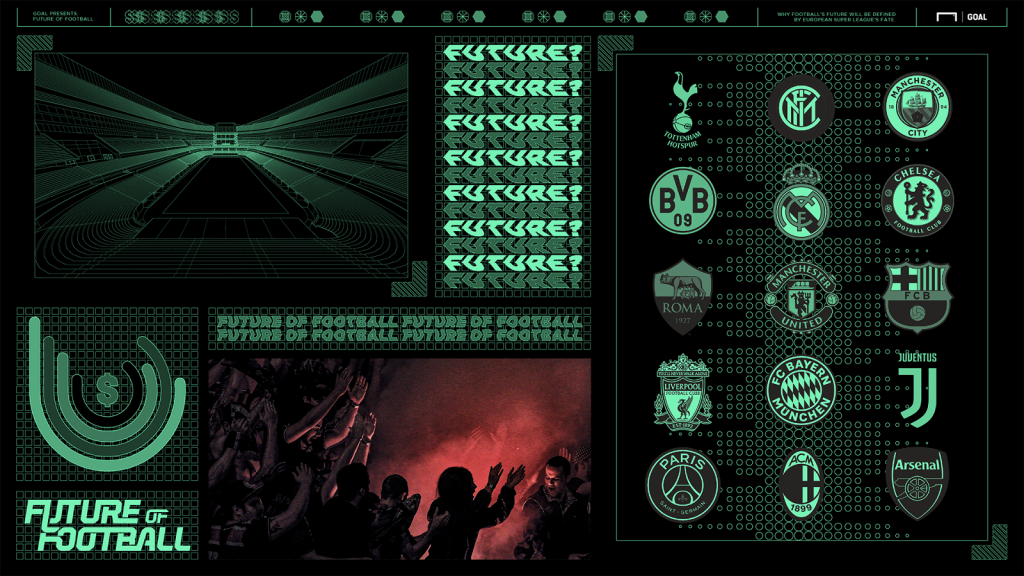
Despite that potential for “death”, City would almost certainly be one of the elite who would benefit should a Super League ever get off the ground. They would be joined by fellow English sides Manchester United, Liverpool, Chelsea and Arsenal. In short, it is a scheme to help the rich get richer with little to no regard to those further down the pyramid.
“It is very much geared towards the rich getting richer and an acceleration of the gaps between the existing elite and the rest.”
To put the figures into context, the forecast in the leaked emails suggested a European Super League would generate “€500 million (£444m/$555m) plus” per club, per season. By way of comparison, Real Madrid received around €88.6m (£77m/$103m) from UEFA when they won the Champions League in 2016.
You can understand, therefore, why there is so much support from Juventus chairman Andrea Agnelli for the idea. The Bianconeri chief claims his backing of the European Super League is to maintain an interest in the sport in the future, but coincidentally his club would be one of a small number set for a big pay day.
“If we are not progressive, we are simply protecting a system that is no longer there, a system that is made of domestic games that will have little interest for our kids,” Agnelli said in 2019. Is that true though? Or is Agnelli just driven by dollar signs and a desire to attempt to get his club to be on a level with Real Madrid and Barcelona?